Best Local Government Monitoring Software: 4 Options
October 29, 2026
Local government monitoring software watches city and county meetings for you and tells you when something you care about comes up. The right tool depends on how many places you follow and how much detail you need. Here are four honest options, from a focused South Florida service to national platforms and the free tools cities already provide, starting with Dais.
1. Dais
Dais monitors zoning, planning, and commission meetings across Miami, Miami Beach, Miami-Dade County, and Coral Gables. It turns meeting records into plain-English summaries with votes and links to the exact minute in the official video.
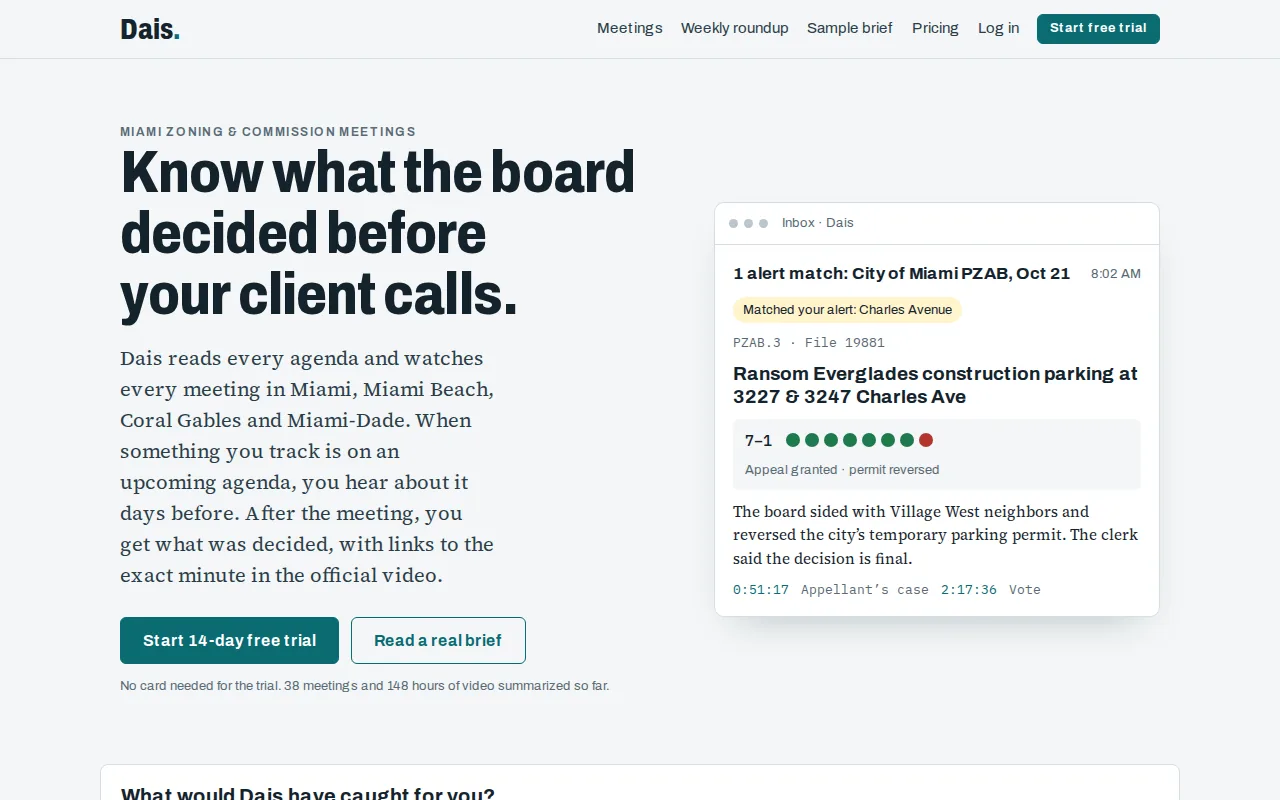
It’s built for people who need to follow local development decisions, including land-use professionals and homeowners near a proposed project. The boards include the City of Miami Planning, Zoning and Appeals Board; Miami Beach Planning Board, Design Review Board, and Historic Preservation Board; Miami-Dade Board of County Commissioners; and Coral Gables Planning and Zoning Board and City Commission.
Dais sends email alerts for an address, street, person or firm, file number, or activity within a chosen distance of an address. That can help a broker watch a listing area or a homeowner keep tabs on a nearby proposal without following every meeting. Reporters can also use Dais votes, quotes, and timestamps for local government reporting to check what a board decided against the public video.
Neighbor is $19 a month for alerts on up to three addresses, paid at signup. Professional is $199 a month and Firm is $349 a month for up to five people; both start with a 14-day free trial, no card needed. Dais is the clearest fit here when your work centers on South Florida land use, not a general-purpose city operations system.
2. Curate by FiscalNote
Curate is FiscalNote's local policy tracking product. FiscalNote says it scans agendas, minutes and planning documents from more than 12,000 local governments, and delivers matches through a dashboard and daily email reports.
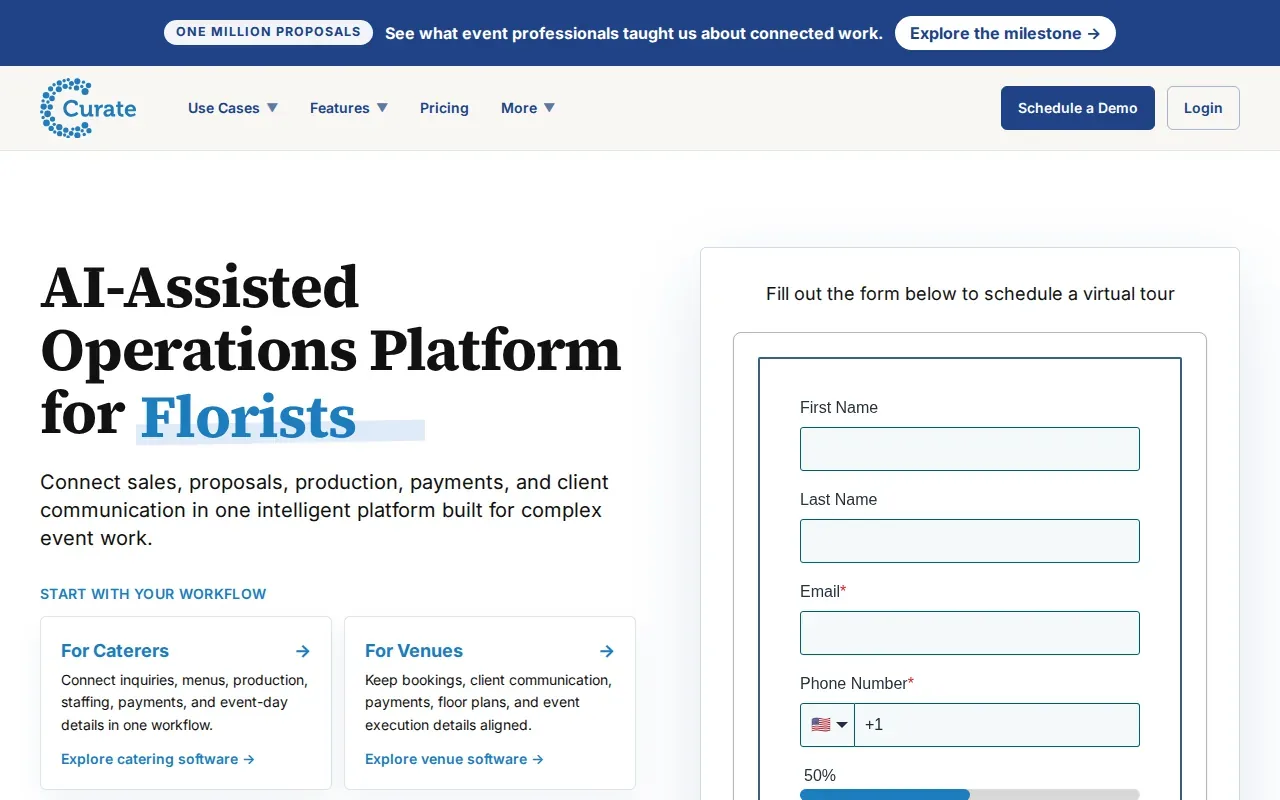
Its strength is breadth. A company or trade association that needs to know when any city in the country takes up a topic, such as short-term rentals or data centers, gets far wider coverage than a regional service can offer. That is the job Curate is built for.
The trade-off is depth. Curate works from meeting documents, so it reports what an agenda or minutes say rather than what members said during the hearing. If you need to know how a specific Miami board voted on a specific address, and what conditions were attached, check how much of that detail its results include for your boards before you buy.
3. Quorum Local
Quorum Local is part of Quorum's public affairs software. Quorum says it follows agendas and minutes for council, committee and board meetings in the largest U.S. cities and counties, with keyword alerts, AI transcripts of meetings, and contact data for local officials.
It is aimed at government relations teams: people who track issues across many cities and also manage relationships with the officials voting on them. Logging meetings with officials and tracking outreach sit in the same system as the alerts, which matters to a lobbying or advocacy team.
For a single land-use matter in South Florida, it is likely more platform than you need. Ask for a demo using a real Miami-Dade or Coral Gables item, and confirm the specific boards you follow are covered, not only the main city commission.
4. Your city's own agenda portal (free)
Every city publishes its agendas and meeting video for free, and some portals let you sign up for updates. In South Florida, the City of Miami posts on iQM2, Miami Beach on PrimeGov, Coral Gables on Legistar, and Miami-Dade County on its legislative search site.
This is the original record, and it costs nothing. If you follow one board and have time to open each agenda when it posts, it may be all you need. Some Legistar sites let you save a search and get an email when new matching items appear.
The catch is the work. Each portal works differently, agenda packets can run hundreds of pages, and the decision itself is buried in hours of video. Nothing tells you that a project near your property is on next week's agenda unless you go and look. Paid tools exist to do that reading for you.
Compare the options
| Option | Best for | Coverage | What you get |
|---|---|---|---|
| Dais | Land-use professionals and homeowners in South Florida | 11 boards in Miami, Miami Beach, Miami-Dade and Coral Gables | Plain-English hearing summaries, votes, video-minute links, address and file alerts |
| Curate by FiscalNote | Companies and associations tracking topics nationally | 12,000+ local governments (vendor figure) | Document scanning, dashboard, daily email reports |
| Quorum Local | Government relations teams | Largest U.S. cities and counties | Keyword alerts, meeting transcripts, official contact data |
| City agenda portals | Anyone following one board with time to check | One jurisdiction each | The official agendas, packets and video, free |
A simple test works for all four: pick one item from a recent meeting you care about and see how long each option takes to tell you what was decided, by what vote, and where to verify it.
FAQ
What is local government monitoring software?
It watches public meetings and records, such as agendas, minutes and meeting video, and alerts you when something matching your interests appears. Some tools cover thousands of governments at the document level. Others cover a smaller region in more depth, including what was said and decided at the hearing.
Which software tracks zoning meetings near an address in Miami?
Dais sends email alerts for an address, or for anything within a chosen distance of one, across Miami, Miami Beach, Miami-Dade County and Coral Gables. You get a heads-up when an item reaches an agenda and again after the vote.
Can I monitor local government meetings for free?
Yes. Cities post agendas, documents and video on their own portals at no cost, and some let you save searches for email updates. The cost is your time: you have to check each portal and read or watch the material yourself.
Is meeting management software the same as meeting monitoring?
No. Meeting management software, like the systems clerks use to build agendas, runs the meeting process inside a government. Monitoring software is for people outside it who want to follow what those meetings decide.
Conclusion
If you work across dozens of cities, a national platform like Curate or Quorum Local fits. If you follow one board and have the time, the city's own portal is free. If your work is South Florida land use, Dais gives you the decision, the vote and the video moment for the addresses you care about. See recent meetings, or start a 14-day free trial of Professional, no card needed.